
English (Original)
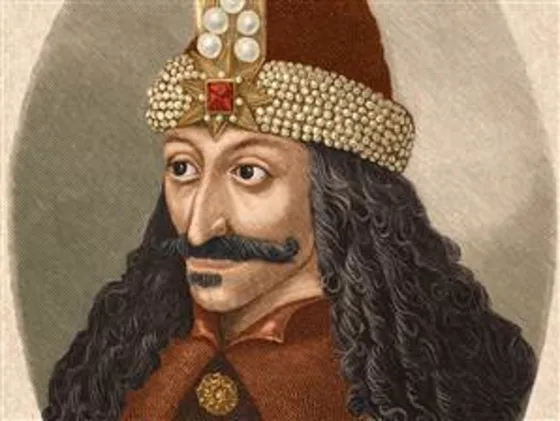
Throughout history, few historical figures have provoked as much terror and fascination as Vlad III, commonly remembered as Vlad the Impaler. While modern audiences recognize him primarily as the dark inspiration behind Bram Stoker’s legendary vampire, Count Dracula, the historical reality was far more horrific. Depending on who you ask, he was either an unforgiving tyrant whose cruelty knew no boundaries or a dedicated patriot who defended Christian Wallachia against the overwhelming power of the Ottoman Empire.
Born around late 1431 in the principality of Wallachia, in modern-day Romania, Vlad entered a world torn by relentless geopolitical conflict and shifting loyalties. His father, Vlad II, had been inducted into the Order of the Dragon, a prestigious knightly society created to defend Christian lands against Ottoman expansion. As part of this honor, the father took the surname 'Dracul, meaning dragon, while his son became known as 'Dracula,' meaning 'son of the dragon.'
When Vlad was still young, his father lost the throne following political betrayal backed by Hungarian nobles. To regain power, Vlad II formed an alliance with the Ottoman Turks, agreeing to pay annual tribute and surrender his two sons, Vlad and Radu, as political hostages to guarantee his loyalty. During his formative years in Ottoman captivity, Vlad received training in warfare, languages, and diplomacy. However, he also witnessed the calculated use of terror and extreme psychological tactics to maintain control over populations—methods he would later integrate into his own style of governing. While his younger brother assimilated comfortably into Ottoman life, Vlad harbored profound resentment, developing a deep-seated determination to resist foreign dominion.
Tragedy struck the family in 1447 when rebel Wallachian aristocrats assassinated Vlad’s father and elder brother. This violent overthrow set off a chaotic period of shifting alliances and regional flight, with Vlad navigating tenuous pacts between Ottoman forces, Moldavian royals, and Hungarian commanders. By 1456, following the fall of Constantinople to the Ottomans, securing regional buffer states became a matter of survival for European powers. Aided by Hungarian military leaders, Vlad defeated the rival prince in personal combat and firmly established his second and most notorious reign over Wallachia.
Upon securing power, Vlad initiated an era of unyielding vengeance. He gathered the noble families suspected of orchestrating his father’s assassination under the pretense of an Easter feast. Once gathered, the older nobles were impaled without warning, while the younger ones were enslaved to build fortifications before being executed as well. Impalement—a slow, excruciating method of execution designed to inflict maximum psychological dread—became his preferred instrument of governance. It is estimated that Vlad impaled tens of thousands of victims, using rows of pierced bodies to intimidate common criminals, rebellious aristocrats, and encroaching foreign armies alike.
Vlad ruled his territory with extreme severity, enforcing strict moral codes and eliminating domestic opposition. When the Ottoman Sultan demanded tribute, Vlad openly defied the imperial court, killing Ottoman emissaries and launching devastating raids south of the Danube. When a colossal Ottoman army arrived in 1462 to subjugate Wallachia, Vlad utilized scorched-earth tactics, poisoning water supplies and conducting deadly nocturnal guerrilla attacks. His crowning act of psychological warfare was creating a massive "forest of the impaled" outside his capital of Târgoviște, where thousands of rotting corpses lined the road, terrifying the advancing Ottoman ranks.
Despite his battlefield tactics, Vlad was eventually outmaneuvered politically when his brother Radu gained Ottoman backing and won over Wallachian nobles weary of endless bloodshed. Vlad fled to Hungary seeking assistance, but his supposed ally, King Matthias Corvinus, imprisoned him for several years to satisfy political interests. Only in 1476 did Vlad regain the throne with a patchwork army, but his third reign lasted barely two months. In early 1477, he was killed in battle against Ottoman forces, who decapitated his body and sent his severed head to Constantinople to prove that the feared warlord was finally dead.
Today, historical assessments of Vlad III remain sharply polarized. In Western Europe and contemporary literature, he is condemned as a psychopathic sadist whose unimaginable atrocities defined an entire era of cruelty. Conversely, in Romanian national history, he is frequently honored as an unyielding leader who restored civic order, resisted foreign subjugation, and sacrificed everything to defend his homeland. Ultimately, Vlad the Impaler was a product of an extraordinarily violent century, a calculating ruler who wielded absolute terror to carve his legacy into the foundations of European history.