
English (Original)
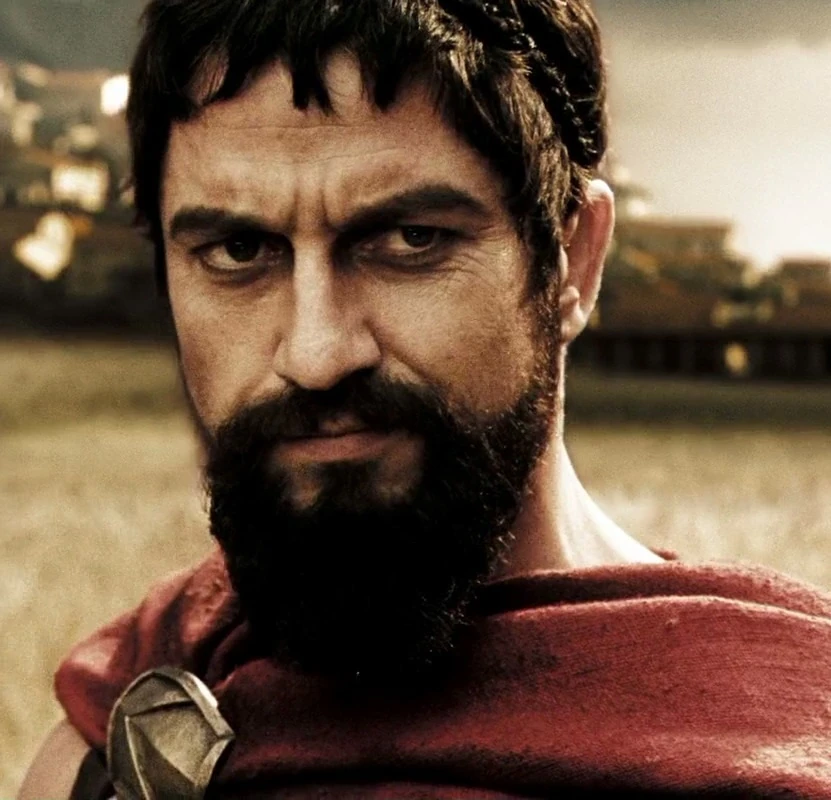
The narrative of King Leonidas and his three hundred Spartan hoplites at the pass of Thermopylae in 480 BCE remains one of antiquity’s most potent touchstones of martial defiance. Immortalized across classical historiography and modern cultural mythology, Leonidas has frequently been portrayed as an invincible, stoic demigod leading an austere warrior fraternity. Yet peeling back layers of romantic folklore reveals a figure deeply molded by the institutional discipline of the Spartan state—a ruler whose ultimate tactical sacrifice was both an inevitable product of his upbringing and an astute geopolitical intervention that prevented the annihilation of classical Greece.
Born around 540 BCE to King Anaxandridas II, Leonidas occupied an unusual position within the royal Agiad lineage. In most Hellenic city-states, the eldest son was groomed exclusively for governance and was consequently exempt from standard citizen obligations. Because his older half-brother Cleomenes was direct heir to the throne, Leonidas was subject to the full rigors of the agoge—Sparta's notoriously demanding communal educational and military institution. Entering this system at the age of seven under the supervision of the paidonomos, young Spartans were stripped of shoes and provided only a single cloak throughout freezing winters and scorching summers to condition their bodies against extreme environmental adversity. Rations were deliberately meager to cultivate endurance, stealth, and resilience, while physical infractions were met with unyielding disciplinary measures. Concurrently, youths were schooled in literacy, tactical maneuver, music, and laconic expression. Having endured this crucible from childhood to young adulthood, Leonidas was molded into a seasoned, highly adaptable infantryman, possessing intimate, firsthand knowledge of frontline hoplite warfare that monarchs reared solely in palace courts typically lacked.
Leonidas’s ascension to the Agiad kingship arrived through unpredictable dynastic friction. Following the death of Anaxandridas, Cleomenes assumed the diadem, but his increasingly erratic maneuvers against neighboring city-states and contentious political intrigues provoked unrest among the Spartan citizenry. Accused of madness and imprisoned under armed guard, Cleomenes allegedly took his own life in captivity. With an elder brother, Dorieus, having previously perished on a colonization venture in Sicily, the succession passed directly to Leonidas around 490 BCE. Consolidating his royal status, Leonidas married Gorgo, the sharp and politically astute daughter of Cleomenes, while preparing the city-state for an existential confrontation with the Persian Empire under the Achaemenid dynasty.
When Xerxes the Great launched his colossal overland and maritime invasion of Greece a decade later, the fragmented Hellenic poleis confronted an overwhelming numerical catastrophe. Facing internal political hesitation and concurrent religious festivals—namely the Carnea in Sparta and the Olympic Games—that theoretically forbade full mobilization, Leonidas orchestrated an audacious advance guard. Hand-picking a royal vanguard of three hundred veteran Spartan hoplites, all of whom had already fathered living sons to secure their domestic lines, he marched north to intercept the Persian vanguard at the strategic bottleneck of Thermopylae—the "Hot Gates." Flanked by roughly four to seven thousand allied Greek contingents from Phocis, Thespiae, and other poleis, Leonidas fortified the narrow coastal corridor, leveraging steep mountain cliffs on one flank and the Malian Gulf on the other to negate the Persian cavalry and overwhelming numbers.
For two days, the Greek phalanx held with devastating efficiency. Employing overlapping bronze-faced aspides and thrusting spears, the hoplites repeatedly absorbed waves of Persian infantry, repelling Xerxes’s elite "Immortals" through coordinated tactical feints and impenetrable defensive cohesion. However, the strategic equilibrium collapsed on the evening of the second day when a local Greek guide named Ephialtes disclosed the hidden Anopaea mountain trail to the Persian command. By dawn of the third day, the Persian vanguard had traversed the passage, successfully circumventing the Phocian mountain guard and outflanking the Greek defenders in a fatal pincer.
Recognizing that general encirclement was inevitable, Leonidas demonstrated rare tactical clarity and strategic magnanimity. Ordering the allied Greek forces to withdraw southward to preserve their armies for future campaigns, he resolved that the Spartans would remain behind to form a rearguard, holding the pass to cover the retreat. Notably, approximately four hundred Thespians under Demophilus resolutely refused to abandon the position, choosing of their own volition to stand alongside the Spartans until the end.
The final phase of the engagement witnessed savage close-quarters attrition beyond the defensive wall. Leonidas fell during the thick of the melee. The ensuing struggle over his fallen corpse became a fierce contest of will; four times the Spartans rallied to reclaim his body from Persian hands before consolidating on a nearby hillock. With their spears shattered and swords ruined, the surviving defenders fought with daggers, shields, rocks, and bare hands until Xerxes ordered his archers to saturate the perimeter with massed missile volleys, terminating the rearguard.
In an unprecedented departure from Persian customs of battlefield chivalry, an enraged Xerxes ordered Leonidas’s corpse decapitated and crucified—a grim testament to the profound psychological and military toll the defense had exacted on the invading forces. Nevertheless, the tactical catastrophe at Thermopylae yielded a pivotal strategic triumph. The three-day delay stalled Xerxes’s advance long enough for the allied navy to regroup at Salamis and subsequently shatter Persian naval dominance. Leonidas’s refusal to yield became an enduring cultural beacon for Hellenic resistance, demonstrating that institutional discipline, self-abnegation, and principled sacrifice could withstand overwhelming imperial hegemony.