
English (Original)
In the annals of scientific discovery, few names shine as brightly, yet remain as enigmatic, as Nikola Tesla. Born in 1856 in Smiljan, a village in the Austrian Empire (modern-day Croatia), Tesla was a true visionary whose groundbreaking work in electricity and magnetism laid the foundation for much of our modern technological world. From an early age, he displayed an extraordinary intellect and an almost obsessive curiosity about how things worked. His mind was a fertile ground for ideas, often visualizing complex inventions in their entirety before even putting pen to paper. This unique ability to conceptualize and refine designs purely in his imagination would become a hallmark of his inventive process, setting him apart from many of his contemporaries.
Tesla's formal education began with studies in engineering at the Austrian Polytechnic in Graz and later at the University of Prague. During these years, he became fascinated with the limitations of direct current (DC) electricity, which was then the dominant system. He observed that DC power transmission was inefficient over long distances and required frequent power stations. This realization sparked his lifelong quest to develop a more efficient electrical system. He envisioned a world powered by alternating current (AC), a system he believed could transmit electricity across vast distances with minimal loss. This early insight was a pivotal moment, shaping the direction of his future research and ultimately leading to one of the most significant technological revolutions in human history.
In 1884, with just four cents in his pocket and a letter of recommendation, Tesla arrived in New York City, eager to make his mark. He quickly found employment with Thomas Edison, the celebrated inventor and proponent of DC electricity. Initially, their collaboration seemed promising. Tesla was tasked with improving Edison's DC generators and motors, and he claimed Edison even offered him a substantial sum for successful redesigns. However, a fundamental disagreement soon emerged regarding the superiority of AC versus DC. Edison, deeply invested in his DC patents and infrastructure, was vehemently opposed to AC, viewing it as dangerous and impractical. This ideological clash marked the beginning of a famous rivalry, often dubbed the 'War of Currents', which would define a significant period in electrical engineering.
Frustrated by Edison's resistance and the unfulfilled promises, Tesla eventually left Edison's company. He briefly worked on arc lighting systems before securing funding for his own venture, the Tesla Electric Company, in 1886. It was during this period that he developed the induction motor, a device that would revolutionize the use of electricity. This motor, powered by alternating current, was incredibly efficient and robust, making it ideal for industrial applications. His patents for the AC motor and transformer were revolutionary, demonstrating the practical viability of his AC system. These inventions caught the attention of George Westinghouse, a shrewd businessman and fellow advocate for AC power, who recognized the immense potential of Tesla's work.
In 1888, Westinghouse purchased Tesla's AC motor and transformer patents for a significant sum, including royalties based on the electricity generated. This partnership was crucial for Tesla, providing him with the resources and platform to further develop and promote his AC system. Together, Tesla and Westinghouse challenged Edison's DC dominance, leading to intense public debate and demonstrations. Edison, fearing the loss of his market share, resorted to sensationalizing the dangers of AC, even publicly electrocuting animals to prove his point. Despite these efforts, the inherent advantages of AC – its ability to be transmitted efficiently over long distances and easily transformed to different voltages – ultimately prevailed.
The decisive victory for AC came with the contract to illuminate the 1893 World's Columbian Exposition in Chicago and, more significantly, the project to harness the power of Niagara Falls. Tesla's polyphase AC system was chosen for both, a monumental achievement that showcased its superior efficiency and safety. The successful illumination of the Chicago fair, a dazzling display of light and power, captivated millions and firmly established AC as the future of electricity. Subsequently, the construction of the first large-scale AC hydroelectric power plant at Niagara Falls, designed by Tesla and Westinghouse, marked a turning point. It demonstrated that vast amounts of energy could be generated and transmitted to distant cities, fundamentally changing how societies accessed and utilized power.
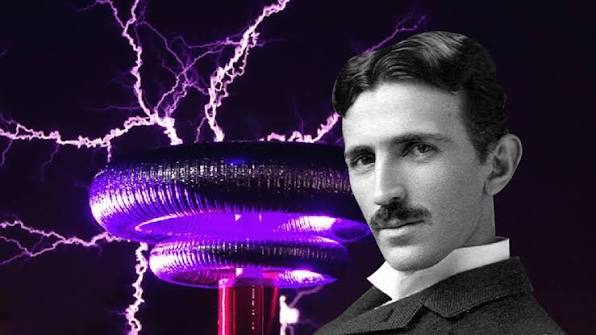
Beyond his work on AC, Tesla's inventive genius extended into numerous other fields. He pioneered the development of radio technology, conducting public demonstrations of wireless communication years before Guglielmo Marconi. His experiments with remote control led to the invention of the first radio-controlled boat, a marvel of engineering presented at Madison Square Garden in 1898. He also explored concepts of wireless energy transmission, envisioning a global system that could deliver free electricity to everyone. His ambitious Wardenclyffe Tower project on Long Island, intended to be a prototype for this global wireless power and communication system, unfortunately ran out of funding and was never completed, becoming a symbol of his unfulfilled dreams.
Tesla's later life was marked by increasing eccentricity and financial difficulties, despite his numerous patents and profound contributions. He became known for his peculiar habits, such as his obsession with the number three, his meticulous hygiene, and his deep affection for pigeons. While some of his more radical ideas, like the 'death ray' or communicating with other planets, were met with skepticism, they underscored his boundless imagination and his belief in the limitless potential of science. He often struggled to translate his grand visions into practical, commercially viable products without adequate financial backing, a challenge that plagued him throughout his career.
Despite these personal struggles, Tesla's impact on the world is undeniable. His AC motor and power system remain the backbone of our electrical grids, powering homes, industries, and transportation worldwide. His foundational work in radio, robotics, and remote control laid the groundwork for technologies that would emerge decades later. He was a man who truly lived ahead of his time, often misunderstood by his contemporaries, yet whose ideas were decades, if not a century, ahead of their widespread adoption. His patents, numbering in the hundreds, represent a legacy of innovation that continues to inspire engineers and scientists today.
Nikola Tesla passed away in 1943, largely alone and in relative obscurity, in a New York City hotel room. However, his reputation has undergone a significant resurgence in recent decades. He is now widely recognized as one of history's most brilliant and influential inventors, a true genius whose contributions were essential to the technological advancements of the 20th century and beyond. His story serves as a powerful reminder of the importance of visionary thinking, perseverance in the face of adversity, and the profound impact one individual can have on the course of human progress. Tesla's dream of a world powered by clean, abundant energy continues to resonate, inspiring new generations to push the boundaries of what is possible.