
English (Original)
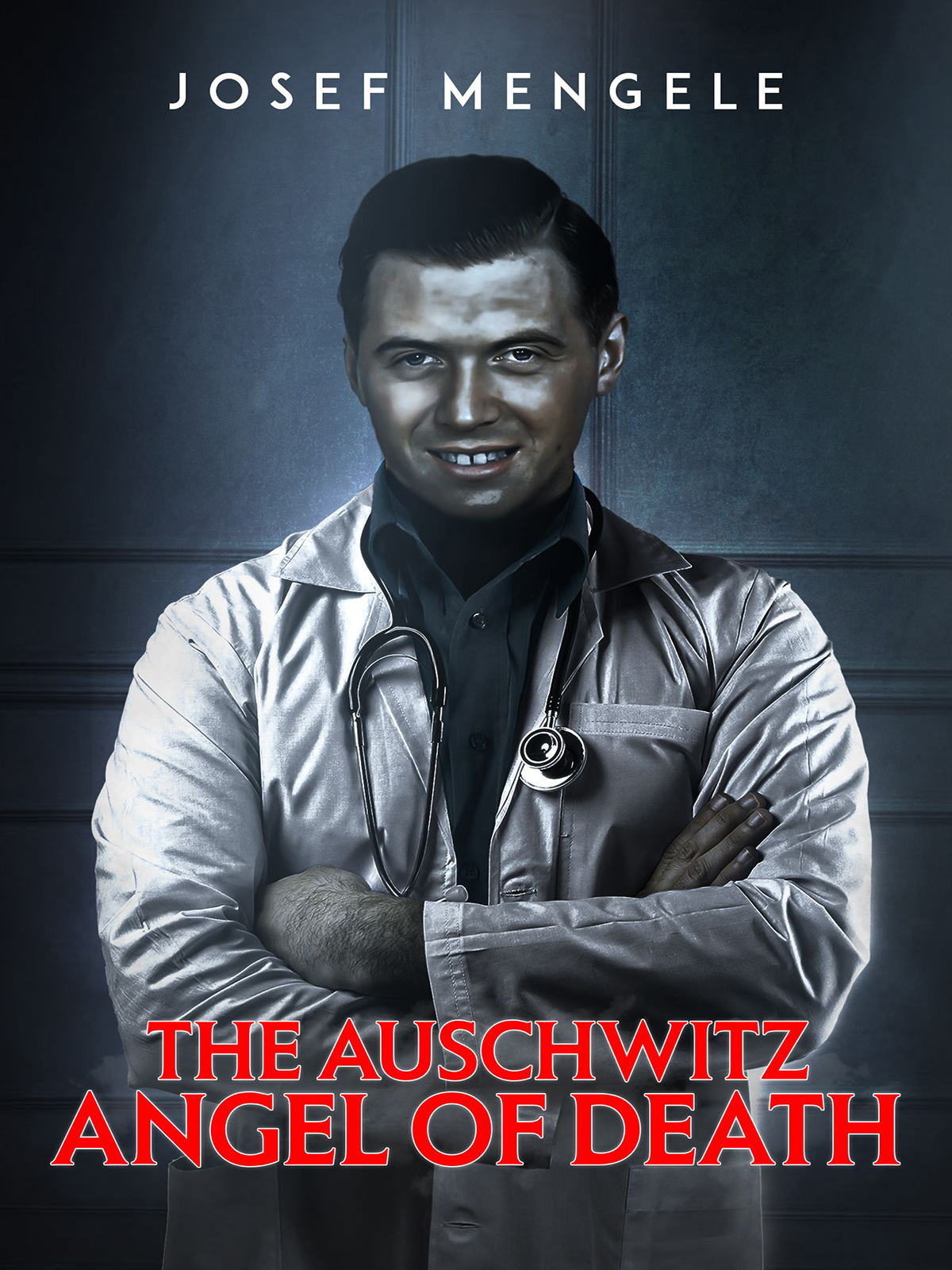
Josef Mengele was a German doctor who became infamous for his terrible actions during World War II. Born in 1911 in Günzburg, Germany, he pursued studies in medicine and anthropology before the war began. He joined the Nazi Party in 1937 and the SS, the Nazi paramilitary organization, in 1938. When the war started, he worked as a doctor for the SS, serving on the Eastern Front for a period. However, his name is primarily remembered today because of his horrific role at Auschwitz, a notorious concentration camp in occupied Poland where millions of people were systematically murdered. There, he earned the chilling nickname 'The Angel of Death' due to the incredibly cruel and unethical experiments he performed on prisoners. His story represents a profoundly dark chapter in human history, illustrating how scientific knowledge and medical practice can be twisted for the most evil and destructive purposes imaginable.
In 1943, Mengele was transferred to Auschwitz, a vast and terrifying complex designed for mass extermination. This was a large camp in Poland where the Nazis sent Jews, Roma, political prisoners, and other groups they considered 'undesirable' for systematic killing. When new prisoners arrived by train, Mengele was frequently present at the selection ramp. With a simple gesture, he decided who would live to work for a short time and who would die immediately in the gas chambers. He would point left or right, sending thousands of innocent people to their deaths without any hesitation or visible emotion. He often appeared calm and well-dressed, looking like a normal, educated man, but his decisions were incredibly cruel and had absolute power over life and death. This role gave him immense, unchecked authority, which he used with extreme brutality and without mercy.
Mengele was particularly obsessed with human genetics and focused his research on twins. He believed that studying twins could help the Nazis understand how to create a 'perfect' Aryan race, which was part of their racist ideology. He performed many painful, unethical, and often deadly experiments on children, especially identical twins. For instance, he injected chemicals into their eyes in a horrific attempt to change their eye color. He also performed various operations without anesthesia, causing unimaginable pain, and deliberately infected healthy people with diseases like typhus and tuberculosis to study their effects. These experiments caused terrible suffering, permanent disability, and ultimately, death for countless victims. The children he experimented on were often malnourished, terrified, and lived in constant fear, knowing they could be subjected to his cruel procedures at any moment.
As World War II was drawing to a close in 1945, the Soviet army was rapidly advancing towards Auschwitz. Mengele knew that if he were captured, he would be arrested and tried for his horrific war crimes. In a desperate attempt to cover his tracks, he quickly destroyed many of his medical records and other incriminating documents before escaping from the camp. He then disguised himself as a German soldier and managed to avoid capture by the Allied forces who were sweeping through Europe. Using false papers and adopting different names, he successfully hid his true identity. This marked the beginning of his long and secretive life as a fugitive, constantly moving and always trying to stay one step ahead of those who were determined to bring him to justice for his unspeakable atrocities.
After the war, Mengele spent several years hiding in various parts of Germany, relying on a network of former Nazi sympathizers. Then, in the early 1950s, he successfully fled Europe and traveled to South America, a common destination for many former Nazis seeking refuge. He first settled in Argentina, later moving to Paraguay and eventually Brazil. He lived under numerous different aliases throughout his time there, such as 'Helmut Gregor' and 'Wolfgang Gerhard', constantly changing his identity to avoid detection. He sometimes worked for his wealthy family's farm equipment business, which provided him with financial support and helped him maintain his hidden existence. Despite living a life on the run, he often felt relatively safe because these South American countries did not always cooperate fully with international efforts to find and extradite war criminals.
For many decades, numerous dedicated groups and individuals tirelessly pursued Mengele. Holocaust survivors, who remembered his face and his cruelty, worked to ensure he would not be forgotten. Israeli intelligence, known as Mossad, and famous Nazi hunters like Simon Wiesenthal, devoted their lives to tracking him down. They were determined to see him face trial for his crimes against humanity, believing that justice must be served. There were countless reports of his sightings in different locations, but he always managed to disappear just before capture. The international search for him became famous, and his face, though often disguised, was known around the world. However, he was exceptionally skilled at hiding and received significant help from a secret network of supporters who either shared his extremist ideology or simply wished to protect him from justice.
Josef Mengele's life as a fugitive finally ended in 1979. He suffered a stroke while swimming in the Atlantic Ocean off the coast of Brazil and tragically drowned. For several years after his death, people did not know for certain if he was truly dead or still alive and in hiding. The uncertainty caused great frustration for those who sought justice. It was not until 1985, six years later, that his body was finally located in a grave near São Paulo and exhumed. Forensic scientists used advanced methods, including dental records and later DNA tests, to confirm beyond doubt that it was indeed Josef Mengele. This news brought mixed feelings to the world. Many people were relieved that he was no longer alive, but there was also profound sadness and anger that he had never faced justice for his terrible actions and had lived his entire life without punishment.
Mengele's story remains a powerful and chilling reminder of the Holocaust's unimaginable horrors and the depths of human cruelty. His name has become a universal symbol of extreme brutality, medical malpractice, and the horrific abuse of scientific knowledge. His countless victims and their surviving families never forgot what he did, and their pain continues to echo through history. Even though he successfully escaped justice during his lifetime, his legacy is one of absolute infamy and widespread condemnation. The relentless international search for him demonstrated the world's unwavering determination to remember the past, to learn from its darkest moments, and to fight tirelessly against such evil. His story serves as a crucial lesson about the fundamental importance of human rights, ethical conduct, and the extreme dangers of unchecked power and extremist ideologies.