
English (Original)
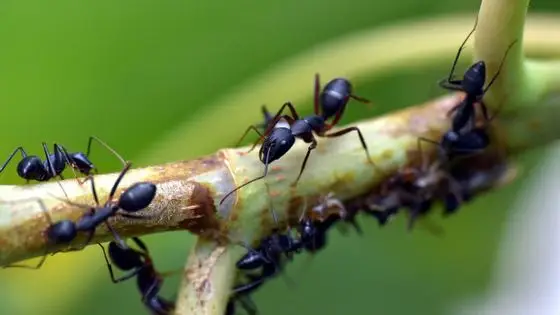
In 2012, researchers at the Georgia Institute of Technology noticed something odd about fire ants crossing a narrow bridge: the more ants piled in, the faster the colony moved. Human crowds behave in exactly the opposite way, since overcrowding tends to bring things to a standstill. The explanation, it turns out, lies in a simple rule that every ant seems to follow: slow down when the path ahead is blocked, and never push past a neighbour. Fire ants also refuse to give way to panic. When floodwaters rise, they link their bodies into a living raft that can float for weeks, with the workers at the bottom constantly swapping places with those on top so that no one drowns.
Observers once assumed that such feats required central planning, but no queen pulls the strings; she lays eggs and nothing more. What looks like coordination is in fact the sum of thousands of tiny reactions, none of which is clever in itself. Each ant deposits a pheromone as it walks, and others tend to follow the strongest scent, so a shorter path is reinforced simply because ants return along it sooner. This makes the system remarkably resilient: if a branch is destroyed, the colony quickly lays new trails. Engineers have borrowed the idea, and several logistics firms now use ant-inspired software to reroute delivery vans in real time. Some city planners have even begun to look into whether similar rules could ease congestion on our roads. Whether people can ever match the humble ant, however, remains doubtful, since our instinct in a jam is precisely to jump the queue.